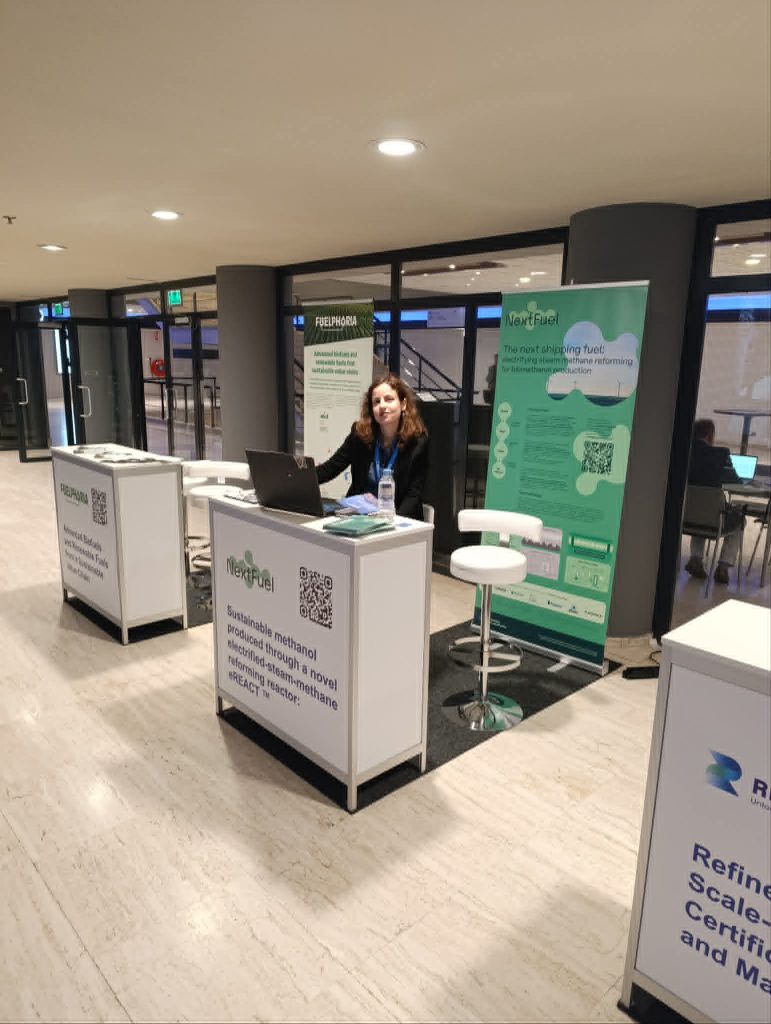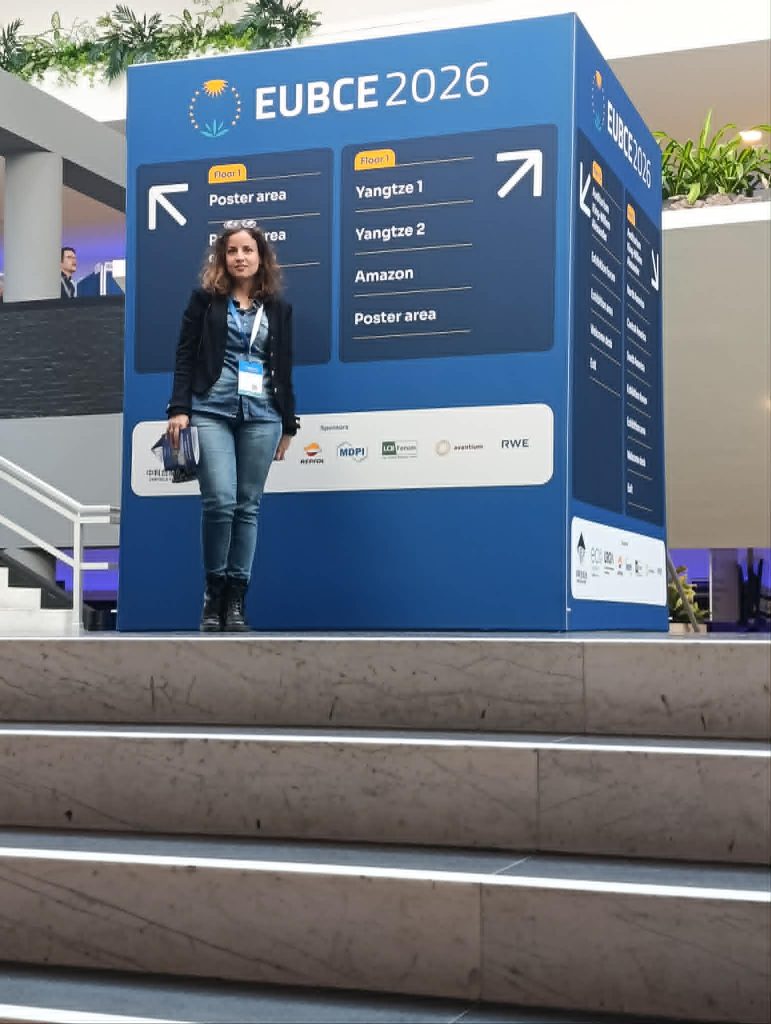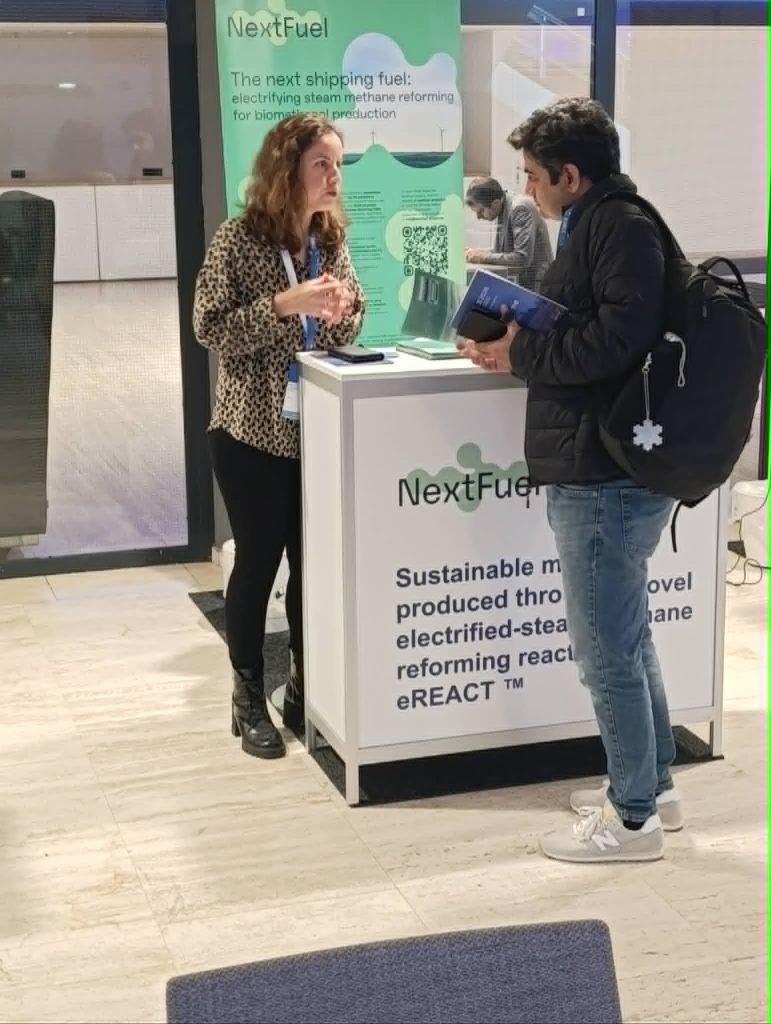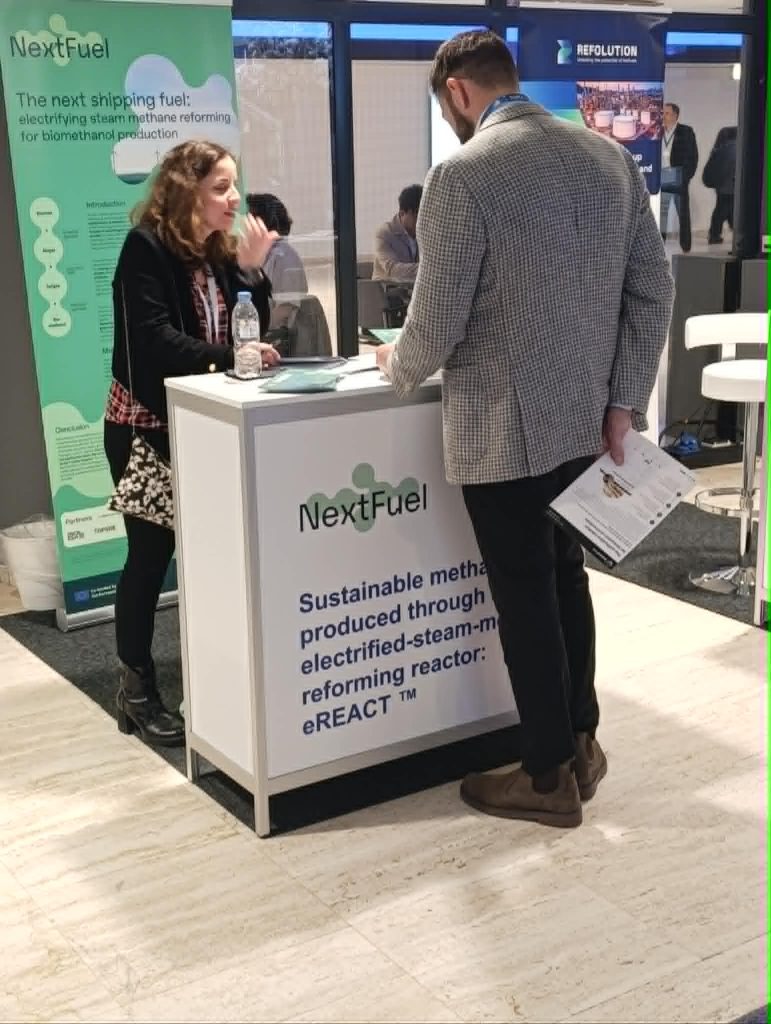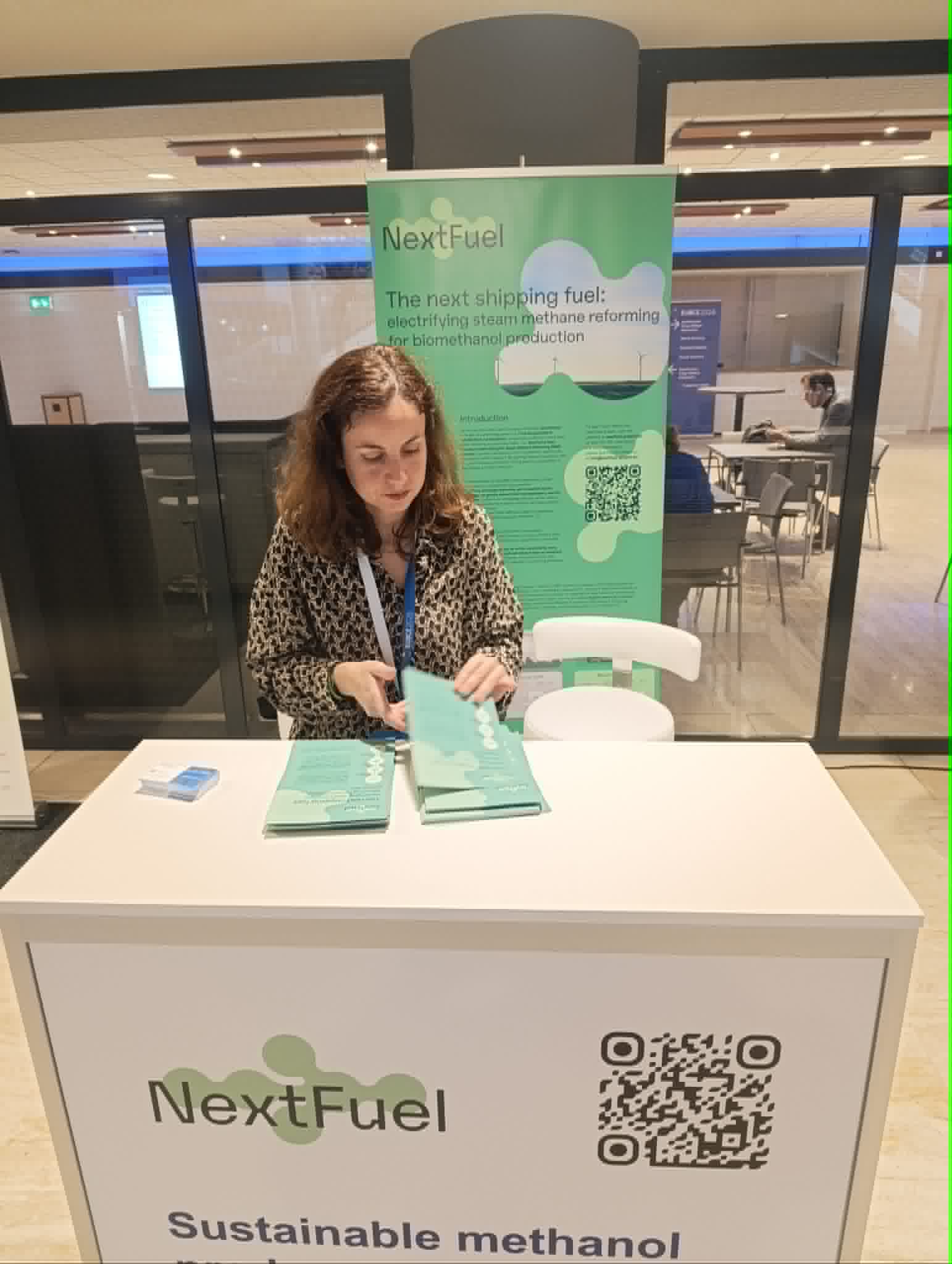
The NextFuel project was proud to participate as an exhibitor at EUBCE 2026, presenting its innovative approach to renewable methanol production and engaging with the wider biomass, bioenergy and renewable carbon community.
During the event, visitors had the opportunity to learn more about how NextFuel is demonstrating the use of electrically heated chemical catalysis for improved production and consumption figures. Through the application of the eREACT™ approach, the project aims to enable the production of methanol from biogas, or other combinations of methane and CO₂, bringing renewable methanol production closer to cost competitiveness with fossil-based alternatives and supporting its future scale-up.
NextFuel’s presence at Stand 54 attracted strong interest from researchers, industry representatives, technology providers and stakeholders working towards cleaner and more sustainable energy solutions. The event provided an excellent opportunity to share the project’s objectives, present its progress, exchange knowledge, and explore new perspectives for future collaboration.
We would like to warmly thank our CERTH partners for representing the NextFuel project at EUBCE 2026 and for their excellent contribution to the project’s presence as an exhibitor. Their active engagement with visitors, stakeholders and the wider bioenergy community helped showcase NextFuel’s innovative work and made the event a real success for the project.
Participation in EUBCE 2026 was an important moment for NextFuel, strengthening the project’s visibility and highlighting the potential of renewable methanol as part of the transition towards more sustainable fuels and energy systems.
A sincere thank you to everyone who visited the NextFuel stand, shared their insights and showed interest in the project. We look forward to continuing the conversation and sharing more updates as NextFuel progresses.
Follow the NextFuel project on LinkedIn to stay updated on our latest news, activities and results.
This project has received funding from the European Union’s Horizon Europe research and innovation program under grant agreement No. 101136225.